
How to Ship OTR & Industrial Tires: Air Freight vs Sea Freight (LCL/FCL) + Rail | Reduce Shipping Cost
1.Introduction
OTR tires (Off-the-Road tires) and industrial tires are often more difficult—and more expensive to ship—than many other “heavy cargo” categories. The main reason is simple: tires are bulky, sometimes light relative to volume, and typically lower value per cubic meter. As a result, logistics cost can take a much larger share of the total order cost, especially for international shipments.
At Tirelink, we help customers reduce shipping costs by optimizing packing, palletizing, and container loading efficiency (CBM/volumetric utilization), and by supporting cost-effective LCL/FCL/air freight strategies.

1) Air Freight (Fast, but usually expensive for large tires)
- Fast transit time
- Broad network coverage
Why air freight is often a cost disadvantage for tires
- Air freight is commonly charged by volumetric weight. Tires are 3D hollow structures, so when size increases, volume grows much faster than rubber weight. That means the cost can increase sharply as the dimensions get larger.
- In many cases, for medium-to-large OTR tires, air freight can become very close to—or significantly higher than—the cargo value, depending on the route and volumetric calculation.
Best use cases
- Small urgent replenishment
- Samples / trial orders


2) Sea Freight (Cost-effective for most tire shipments)
Sea freight is usually the best option for balancing cost and capacity. Two common models are:
2.1 LCL (Less-than-Container Load / sea freight consolidation)
Advantages
- Charged by volume (CBM), often more cost-effective than air
- Usually flexible for small quantities (often from a small volume threshold)
Disadvantages
- Often requires palletizing, which can increase overall volume and reduce space efficiency
- May include third-party handling and additional loading/unloading or transshipment steps
- LCL depends on available consolidation routes. Some regional or secondary ports may have limited LCL services due to insufficient cargo volume
- Requires time to consolidate and load onto the vessel, especially for non-direct consolidations
Typical conclusion: LCL is suitable for small to medium shipments, but its cost advantage may decrease when volume becomes high, and a more container-efficient solution is possible.


2.2 FCL (Full Container Load)
Advantages
- Better container loading planning and higher space utilization
- Less wasted internal space and corner gaps compared with loose/palletized packing
- Often lower cost per shipment when the order reaches container efficiency
Disadvantages
- Higher minimum order requirement
- Common reference container capacities:
- 20GP: ~28 CBM
- 40HQ: ~68 CBM
Best use cases
- Regular customers with stable monthly/quarterly demand
- Orders that can reach container efficiency
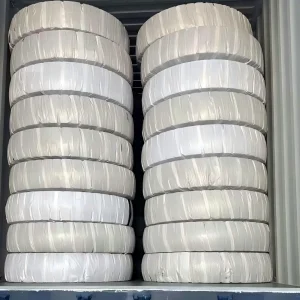

3) Rail Transport (Between sea and air)
Rail can provide faster transit than sea in certain corridors, but it’s usually limited by:
- Rail routes and station availability
- Pricing that is often higher than sea freight
It can be a practical option for certain landlocked markets where rail transport is feasible.
4) Quick Comparison (Typical Industry Trend)
| Category | Cost | Flexibility | Speed |
| Air Freight | Highest | High | Fastest |
| Sea LCL | Medium | Medium | Medium |
| Rail | Medium–High | Limited (needs volume) | Medium |
| Sea FCL | Often lowest | Lower (needs volume) | Medium |
Note: actual prices depend on lanes, seasonality, and packaging/loading.
5) How to Reduce Tire Shipping Cost (Most Practical Tips)
- Reduce wasted internal empty space
Optimize loading of rims (rim), tubes (tube), flaps (flap), and accessories. - Use corners and interior space efficiently
When feasible, combine different tire shapes/sizes to improve packing geometry and reduce gaps. - Bundle compatible items
Tools or small components that can fit into remaining spaces may improve overall utilization. - Do the loading plan before quoting
Many cost problems happen after the freight quote is prepared without a loading/CBM optimization plan. Pre-calculating can prevent expensive rework.
What Tirelink Can Do for Your Tire Shipments
“Ask us for a free loading / CBM check—share your tire sizes, quantities, and destination port.”
Tirelink is a professional OTR & industrial tire solutions provider and exporter. Based in Xiamen, we combine shipping know-how with on-the-ground operational capacity to help you ship faster and more cost-effectively.
We support customers through three core strengths:
1) Ready-to-ship inventory for common OTR & industrial tire sizes
We maintain stable stock for fast-moving models, so you can confirm orders faster and reduce waiting time for replenishment.
- Common OTR tires:
17.5-25 / 17.5R25, 20.5-25 / 20.5R25, 23.5-25 / 23.5R25, 26.5-25 / 26.5R25, 29.5-25 / 29.5R25, 35/65R33 and etc. - Common industrial tires:
6.50-10, 28×9-15, 9.00-20, 8.25-16, 8.25-20 and etc.
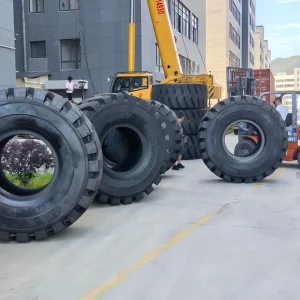
2) Self-operated warehouse in Xiamen with forklifts & professional warehousing team
We operate our self-owned / self-operated warehouse in Xiamen, equipped with material handling equipment like cranes and forklifts and a dedicated professional warehousing team. We can handle:
- Palletizing
- Packing & bundling
- Container loading support
3) Logistics planning to reduce shipping cost (LCL/FCL + loading optimization)
We can help you:
- Calculate loading plans to improve container/consolidation efficiency
- Optimize LCL (sea freight consolidation) shipments when volume requires flexible consolidation
- For long-term customers, support replenishment and replacement tire planning to reduce total logistics and warehousing burden

FAQ
- Q1: When should I choose LCL vs FCL to reduce shipping cost for OTR tires?
LCL is usually suitable when your quantity/volume is limited and you need flexibility.
FCL is often more cost-effective once your order can reach a container-efficient loading plan (better space utilization), which helps reduce wasted space. - Q2: What makes tire shipping cost higher than expected, and how can I reduce it?
Tires are bulky, and shipping costs are often calculated by volume/CBM or volumetric weight.
If packing and loading efficiency are not optimized, you may end up paying for “unused space.”
A better packing plan and container loading optimization can significantly reduce total logistics cost. - Q3: Can you help with tire loading, packing, and container preparation to reduce shipping costs?
Yes. Based in Xiamen, we support loading plan calculation and practical packing/container preparation.
Our self-operated warehouse can handle palletizing, packing/bundling, and container loading support to improve overall efficiency and reduce shipping waste. - Q4: Do you have ready stock for common tire sizes to help reduce lead time and shipping cost?
Yes. For common OTR tire sizes (e.g., 17.5-25 / 17.5R25, 20.5-25 / 20.5R25, 23.5-25 / 23.5R25, 26.5-25 / 26.5R25, 29.5-25 / 29.5R25, 35/65R33) and common industrial tire sizes (e.g., 6.50-10, 28×9-15, 9.00-20, 8.25-16, 8.25-20), we keep stable inventory for faster replenishment—especially for regular customers and walk-in buyers.
Faster availability can reduce rush freight and improve cost control. - Q5: Can you consolidate shipments to reduce shipping costs for smaller quantities?
Yes. We can support cost-effective LCL/FCL consolidation strategies when you need to ship smaller quantities efficiently, while also helping bundle compatible items for better loading utilization.
Q6: How can I get a fast quote to reduce shipping costs?
Send your tire sizes, quantities, and destination port via WhatsApp. We’ll advise the best shipping option (LCL or FCL) and a practical packing/loading approach to help you reduce total shipping cost.
Need A Quote?
If you share your equipment model/tire size and destination, we can recommend the most suitable tire and available freight options for your application.